Tag Archives
Cat color blindness refers to the limited ability of cats to perceive certain colors, primarily due to the structure of their retinas. Unlike humans, who have three types of color receptors, cats possess only two, which affects their color discrimination abilities. This means that while cats can see some colors, their perception is not as vibrant or varied as ours.
Research indicates that cats are most sensitive to blue and green wavelengths, while reds and pinks may appear more grayish to them. This unique visual capability allows them to excel in low-light conditions, making them adept hunters during dawn and dusk, despite their color perception limitations.
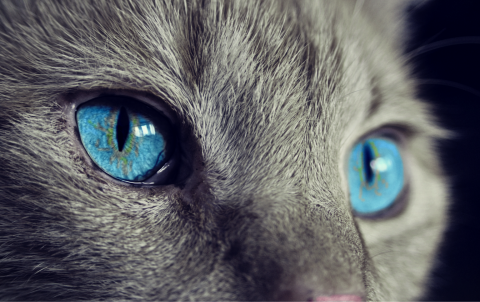
Cats have evolved to have exceptional vision that enhances their ability to navigate their surroundings. Their eyes are designed for detecting movement and seeing in dim light, which is crucial for hunting. The structure of a cat's eye, including a higher number of rod cells, allows them to see well in low-light conditions, making them crepuscular hunters.
In addition to their impressive night vision, cats also have a wide field of view due to the placement of their eyes. This adaptation enables them to spot potential prey or threats from various angles, contributing to their survival instincts in the wild.
There are several myths surrounding cat vision that can mislead pet owners. One common misconception is that cats are completely colorblind. While they do have a limited color spectrum, it is not accurate to say they cannot see colors at all. Understanding the truth behind these myths can help owners appreciate their cats' unique visual capabilities.
Another myth is that cats can see in total darkness. In reality, they require some light to see, but their eyes are adapted to function well in low-light conditions. This ability allows them to navigate their environment effectively during twilight hours, but they are not nocturnal creatures that can see in complete darkness.
To support your cat's visual experience, it's essential to create an environment that caters to their unique perception. This can include using toys that are primarily blue or green, as these colors are more visible to cats. Additionally, ensuring that your home has varied lighting can help your cat navigate comfortably.
Providing climbing structures and vertical spaces can also enhance your cat's visual experience. Cats enjoy observing their surroundings from high vantage points, which not only satisfies their natural instincts but also allows them to engage with their environment in a way that aligns with their visual capabilities.