
Why Your Dog’s Weight Matters
Keeping a healthy weight is one of the most important factors in your dog’s long-term health. Just like humans, dogs that carry excess weight are at a higher risk of developing serious health problems, including arthritis, diabetes and heart disease. Even a small amount of extra weight can place strain on your dog’s joints and organs, reducing their energy levels and quality of life.
The good news is that preventing weight gain is often simple with the right combination of diet, exercise and mindful feeding habits. Understanding the risks of obesity and learning how to recognise body condition means dog owners can help their companions live long and healthy lives.
Why a Healthy Weight Matters
A healthy weight helps just about every system in your dog’s body. Excess weight places strain on joints, organs and metabolism. Over time, this strain increases the risk of developing chronic conditions, such as arthritis, diabetes, heart disease and respiratory problems.
Extra weight also makes it harder for dogs to regulate their body temperature. It also reduces stamina and energy, and has the knock-on effect of causing an avoidance of physical activity and playfulness. It makes sense that this creates an unhelpful cycle where low activity leads to further weight gain.
If you need further convincing, consider that dogs with an ideal body weight live longer than those that are overweight. Even a small reduction in excess weight can significantly improve a dog’s lifespan and quality of life.
Health Risks of Overweight Dogs
Joints and Mobility
Carrying extra weight increases pressure on a dog’s joints, particularly the hips and knees. This can accelerate the development of arthritis and worsen existing joint issues. Dogs that struggle to move comfortably may become less active, compounding the problem.
Diabetes
Overweight dogs are at a higher risk of developing insulin resistance, which can lead to diabetes. Managing diabetes requires lifelong treatment, including daily insulin injections, a special diet and careful monitoring.
Heart and Respiratory Issues
Excess body fat places strain on a dog’s heart and lungs. It will become increasingly more difficult for them to breathe efficiently or tolerate exercise.
Reduced Immunity and hormone imbalance
Obesity affects a dog’s immune responses, making dogs more susceptible to illness. Their endocrine system, as well as their skin and nails, also suffer.
Decreased Lifespan
Studies show that overweight and obese dogs live up to two years less than their lean counterparts.
Is My Dog at a Healthy Weight?
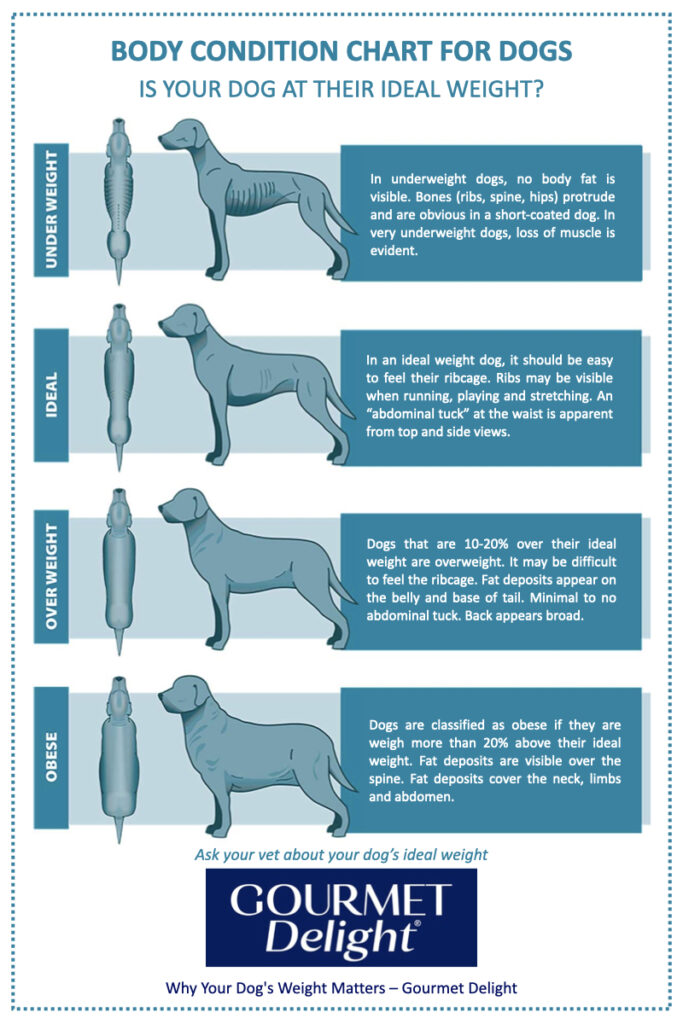
Your vet will advise whether your dog’s diet needs tweaking. Veterinarians in Australia use the Body Condition Score (BCS) system to assess whether a dog is underweight (1-3), ideal (4-6) or overweight (7-9).
In the meantime, you can get a good idea of how your dog is doing in the weight department. Use our chart below as a guide and perform the following checks.
Have your dog stand evenly on all four legs. Feel their ribcage. You should be able to feel their ribs easily without pressing hard. Ribs that are visibly protruding indicate underweight. When viewed from above, you should see a visible waist under their ribs.
Next, take a profile view. You should see what vets call an “abdominal tuck” – in other words, their belly shouldn’t hang down level with or lower than their ribcage, it should be tucked up into their body, rather than rounded or hanging.
Perform this check regularly to keep on top of your dog’s weight.
Tips to Avoid Weight Gain
It may seem logical to some that the most common cause of weight gain is overeating. But it’s easy to overestimate the dietary needs of our dogs. This writer often falls into the trap of comparing the size of their dog’s meals to their own.
Dogs are scavengers by nature, and for the most part, dogs retain their ancestral wolf instinct to take food at any opportunity, in case of future food scarcity. Naturally, because we love them, the drive to meet their needs may overtake mindfulness of what their needs actually are. When we see our precious pup behaving as though they haven’t eaten for days, it is so hard to resist the temptation to give them an extra helping or a treat. Be strong, remember it is instinctual for them to overeat.
The first tip is to choose quality food. Not all calories are equal. Dogs thrive on meat and animal fats. Choosing a food without empty fillers means your dog takes in more nutrition per meal, leading to better health.
The next tip is to measure their meals. Use measuring cups or a kitchen scale to ensure consistent portions. If you are unsure of quantities, see your vet, who will advise on meal portion size according to your dog’s age, size and activity level.
Another tip is to avoid free feeding. There is nothing wrong with giving your dog leftover meat and fat from an unsalted steak. However, to avoid inflating their growing belly, get into a habit of putting these tasty scraps aside to form part of their next meal.
Training treats can also be a problem if the treats are too large or too frequent. Decide on a daily treat limit. Try breaking them up into small pieces to make the treat stretch further through their training. Again, quality matters. Read the ingredients to check for nasty fillers, which provide no nutrition and may even harm their health.
Finally, make sure you schedule in regular walks. Include play, which has the added bonus of contributing to bonding and provides mental stimulation. These forms of movement help maintain muscle tone and joint flexibility.
Other Causes of Weight Gain
There are other reasons why dogs gain weight. As they age, their metabolic rate slows, particularly in male dogs. Desexing can also contribute to a slower metabolism.
In some cases, underlying medical conditions may be responsible for weight gain, such as an underactive thyroid, Cushing’s disease or diabetes. Medication, like steroids for example, can cause dogs to put on extra weight.
Inflammation or fluid retention also adds to their weight. Additionally, certain breeds are more prone to gaining weight than others.
Breeds Prone to Weight Gain
According to the Dogs Australia classification system, the dog groups that need the most exercise are Working (Group 5) and Gundog (Group 3) breeds. These dogs often require 1–2 hours or more of daily activity. It makes sense that if they don’t get this much exercise, they will gain weight. Additionally, their physical frustration often leads to acting out and destructive behaviour. Read more in Big Dog Life.
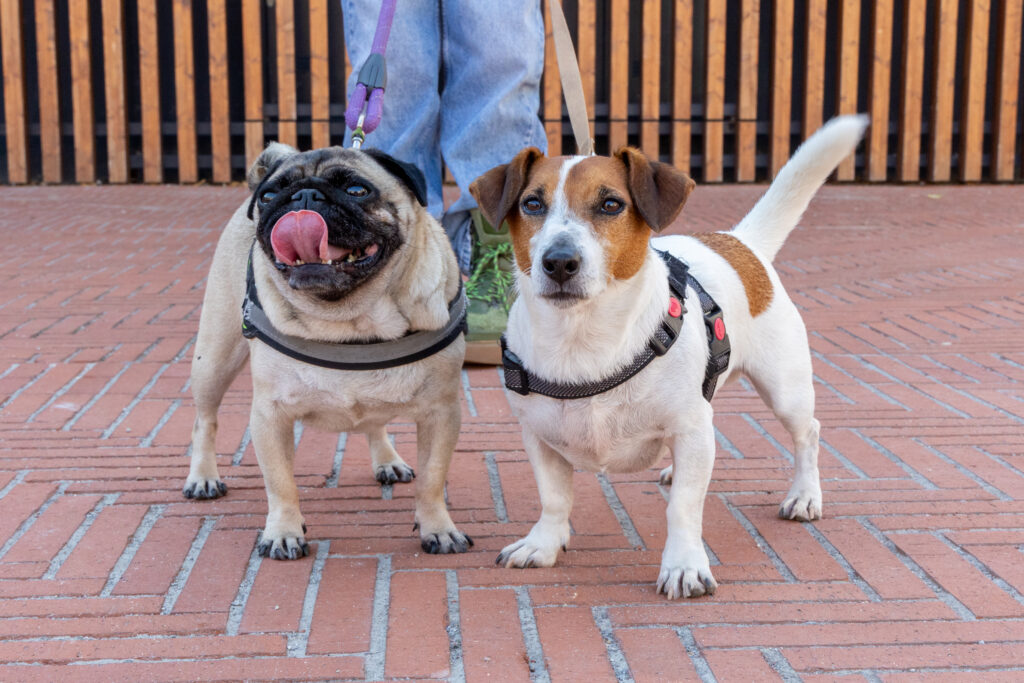
Several dog breeds are more prone to weight gain due to genetics, appetite or lower activity levels. Breeds such as Labrador retrievers, golden retrievers and beagles are highly food-motivated and may overeat if given the chance. Then there are breeds like pugs, bulldogs and basset hounds that tend to have lower energy levels and slower metabolisms.
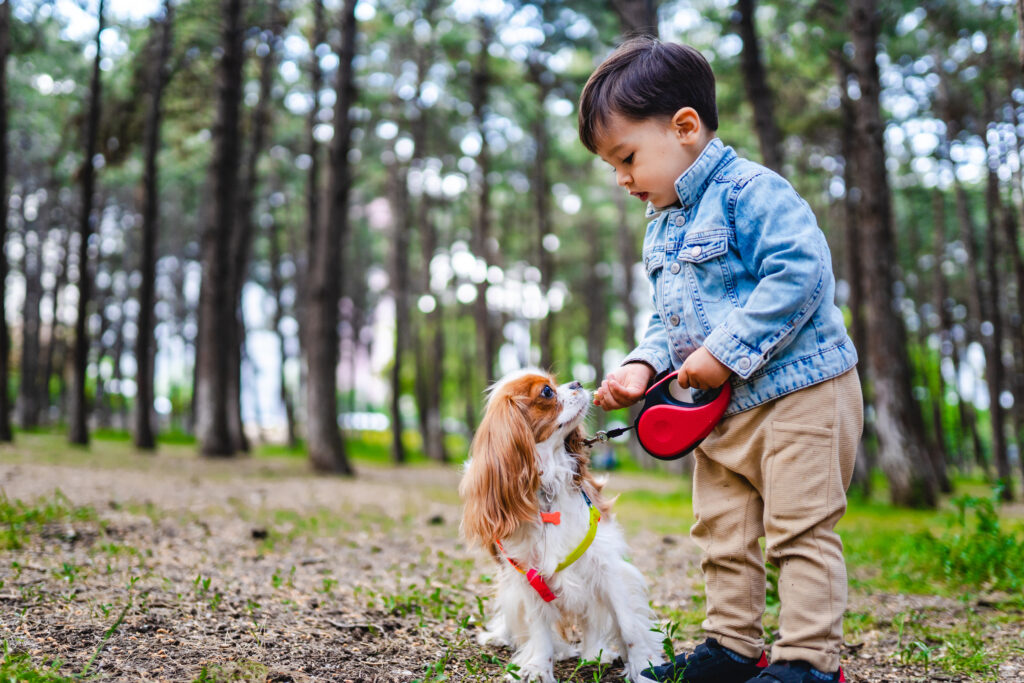
Smaller breeds, such as dachshunds and cavalier King Charles spaniels, also tend to gain weight easily.
Sighthounds – A Category of Their Own
Sighthounds are a subset of the hound dog group that includes greyhounds, whippets and Afghan hounds. They are bred and built for speed and agility rather than endurance or strength. Their lean, streamlined physique with a deep chest, narrow waist and low body fat are ideal for short bursts of intense activity.
An ideal-weight sighthound may very well look as though they belong to the underweight dog weight category, with visible ribs and a highly tucked abdomen. Read Sighthounds — The Perfect Pet?
Maintaining a healthy weight is one of the simplest ways to take care of your dog. Excess weight is an added burden, placing strain on their bodies, increasing the risk of disease and ultimately shortening their life.
The good news is that it is largely within our control. Choose quality nutrition in the right portion size, limit treats and ensure consistent, suitable exercise. Regularly check your dog’s body condition and work with your vet to help you stay on track. Ultimately, keeping your dog at a healthy weight is an act of care that helps them live their fullest life.
